Major General Samuel Smith takes Command at Baltimore: August 25, 1814

“The victorious [British] army are in full march for this city, and will be here in 36 hours…”

For Brig. General William Henry Winder, nephew of the federalist governor of Maryland, the wind-swept stormy night of August 25, 1814 is one of apprehension and decision for his next military move as he rode towards Baltimore. A severe thunderstorm augmented the retreating passage from one of the darkest days of the War of 1812 as the U.S. capitol lay in smoldering ruins and national humiliation following Winder’s defeat at Bladensburg, Md.

At Montgomery County Courthouse, General Winder dashes off a letter to Brig. Gen. John Stricker at Baltimore; “There remains no doubt but the enemy are on the advance to Baltimore …Are the people animated there? Have you any reinforcements from Pennsylvania?” In the immediate crises, Baltimore seemed next as unfounded rumors spread that the British army were on the retreating heels of the Baltimoreans.

On August 25, a Committee of Vigilance and Safety was organized to coordinate Baltimore’s defense. A delegation of military and naval officers presented themselves; Commodore Oliver H. Perry, Major George Armistead of Fort McHenry, Commandant Robert Spence and Brig. Gen. John Stricker who unanimously agreed with three commitee members (Robert Stewart, Col. John Edgar Howard and Richard Frisby) that Major General Samuel Smith “take the command of the Forces which may be called into federal service.” Civilian and military confidence in Winder had diminished over his defeat at Bladensburg.

Outside the City Council Chambers, Samuel Smith is waiting, to be summoned, like Washington on his day of appointment to command the Continental army in 1775. General Smith informed the U.S. Secretary of War on August 27 that he had been “appointed by his Excellency Gov. Winder to the command of the quota of  Maryland under the general order of the 4th July 1814 and that I have assumed command conformably to my rank…”  of major general in the militia and now being called into federal service outranked Brig. General Winder as commander of Baltimore’s defense.

Smith’s experience as an Revolutionary officer, his leadership in the U.S. Senate and ability as a successful merchant, provided the necessary qualifications. On August 25 the Committee of Vigilance and Safety gathered in the Council Chambers. A committee member Richard Frisby remembered the critical conversation that took place in the council chambers when Colonel John E. Howard entered the chamber and rose to speak:

Mr. President, I believe that I have as much property at stake as most others and I have four sons in the field of Battle. I had sooner see my Sons dead and my property in Ashes, than agree to any capitulation with the enemy. No my friends never. All my property is here. My Wife, my Children, my friends, and all that is nearest to me on Earth are here, but I had sooner see them all buried in Ruins, and myself along with them, than see Baltimore make a last and disgraceful surrender to the Enemies of our beloved Country.”

His fellow Baltimoreans and gathered officers with” unbounded confidence in his patriotism, judgment, and valor” cheerfully rally around his standard in defense of their homes and firesides. General Smith, after a moments pause, in a most feeling and animated tone of voice answered.

“My friends I have but one life to lose, and that I have at all times been willing to hazard in defense of my beloved country. Tell the members of your convention that I willingly obey their call, and, confidently expect their hearty cooperation in every necessary means of defense….” Soon the General was on horseback animating his fellow citizens to buckle on their armor and prepare to defend their homes and all that is dear to freemen.

Sources: Samuel Smith Papers, MSS 18974, Reel 5, Cont. 7-8, Library of Congress. Dated 1839; Secretary Theodore Bland to the Committee Aug. 25, 1814.

Published in: on April 11, 2011 at 7:04 pm  Comments Off on Major General Samuel Smith takes Command at Baltimore: August 25, 1814  

The Star-Spangled Banner: Why 15 Stars and 15 Stripes?

On June 14, 1777 the Second Continental Congress at Philadelphia representing the thirteen colonies then situated along the eastern seaboard with the exception of Maine (1820) and Florida (1845) passed the following resolution:

“Resolved, That the flag of the United States be thirteen stripes, alternate red and white; that the union be thirteen stars, white in a blue field, representing a new Constellation.”

Eighteen years later the U.S. Flag Act of January 13, 1794 was signed by President George Washington altering the flag design with the admission of Vermont (1791) and Kentucky (1792) into the Union providing for fifteen stripes as well as fifteen stars.

“An Act making an alteration in the Flag of the United States Be it enacted by the Senate and House of Representatives of the United States of America in Congress Assembled, That from and after the first day of May, Anno Domini, one thousand seven hundred and ninety-five, the flag of the United States, be fifteen stripes alternate red and white. That the Union be fifteen stars, white in a blue field.”

Thus on June 18, 1812 with a declaration of War with England there were only 15 stars and stripes represented on the Fort McHenry flag, though there were actually 18 states with the admission of Tennessee (1796), Ohio (1803) and Louisiana (1812).

On April 4, 1818, a new Flag Act was signed by President James Monroe provided what is still honored today:

An Act to establish the flag of the United States. Be it enacted by the Senate and House of Representatives of the United States of America, in Congress Assembled, That from and after the fourth day of July next, the flag of the United States be thirteen horizontal stripes, alternate red and white: that the union be twenty stars, white in a blue field. And be it further enacted, That on the admission of every new state into the Union, one star be added to the union of the flag; and that such addition shall take effect of the fourth day of July then next succeeding such admission

In 1907 the descendants of Lt. Colonel George Armistead, the commander of Fort McHenry during the war, presented the original star-spangled banner to the Smithsonian’s Museum of American History in Washington, D.C. A replica of this flag is flown by the National Park Service at Fort McHenry National Monument and Historic Shrine in Baltimore, Maryland. by Presidential Proclamation day and night.

.

Published in: on April 10, 2011 at 8:33 pm  Comments Off on The Star-Spangled Banner: Why 15 Stars and 15 Stripes?  

Brig. General Perry Benson (1757- 1827): Defender of St. Michaels, Md.

“In Memory of General Perry Benson, Son of James and Hanna Benson, born August 6, 1857. Captain of the Maryland Line, commended for gallantry and twice wounded in battle in the Revolutionary War. Major General of the Maryland Militia in the War of 1812. Died October 2, 1827. His remains were removed from Wheatland 1901.”  Benson gravesite.

During the American Revolution Captain Benson served under Major General William Smallwood’s First Maryland Brigade at Harlem Heights, N.Y., (1776); the Carolina campaigns (Battle of Cowpens (1781); Guilford Courthouse (1781) and Hobkirk’s Hill, South Carolina (1781). After the war he accompanied George Washington as a lieutenant colonel to quell the 1784 Whiskey Rebellion in western Pennsylvania.

On June 22, 1798 he was commissioned a brigadier general and commanded the 12th Brigade, of Caroline, Talbot and Dorchester Counties. During the War of 1812 he commanded the militia at the Battles of St. Michaels on August 10, 26, 1813. General Benson died on October 2, 1827 at the age of 72 years and is buried in the family graveyard at Newcomb, Talbot County.

Sources: Easton Gazette, October 2, 1827; History of Talbot County, Maryland, 1661-186, by Oswald Tilghman, (Baltimore: Regional Pub., Co., 1967), 303-324; “Perry Benson,” by “Revolutionary War Hero’s Grave Found,” Easton Star Democrat, July 23, 1964.

Published in: on April 10, 2011 at 8:04 pm  Comments Off on Brig. General Perry Benson (1757- 1827): Defender of St. Michaels, Md.  

Hezekiah Niles (1777-1839) News Editor-Niles Weekly Register

Born on October 10, 1777 in Chester County, Pa., to a Quaker family, Hezekiah Niles became one of the most influential journalists of the early 19th century as editor of Niles’ Weekly Register, published in Baltimore weekly from 1811 to the last issue in 1849.

Niles’ apprenticed in Philadelphia as a printer, then in Wilmington, Delaware for several years, until 1805,when he moved to Baltimore, and in 1811 printed the first issue of Niles’ Weekly Register. It is considered one of the most important primary source documents for studying the War of 1812 period. Niles was also known as the great compiler for the amount of  information it contained. It was in fact, illustrations not included, the most widely read national news magazine of his day. His services during the War of 1812 was that of a private in Captain Peter Pinney’s co., 27th Md. Regiment.

He died on April 2,1839 in Wilmington, Delaware of paralytic condition at the age of sixty-two years of age. “His life was well spent, for he raised himself by his industry and integrity…he labored in a purely philanthropic and patriotic manner to promote the views which in his opinion, were conducive to public benefit.”

Source: The Sun, April 3, 1839;

Published in: on April 10, 2011 at 8:01 pm  Comments Off on Hezekiah Niles (1777-1839) News Editor-Niles Weekly Register  

Old St. Paul’s Cemetery: In Memoriam of 1812 Patriarchs

“May they rest in peace in their narrow beds, covered by verdure ever fresh, and wild flowers ever blooming; and may the kindliest dew of Heaven distill upon their graves an emblem of our tears.” Niles’ Weekly Register, March 30, 1814.

Throughout Maryland are thousands of War of 1812 veteran graves and historic burying grounds yet to be found, recorded and remembered, as we begin to celebrate their achievements that gave inspiration for a new national hymn. One of the least visited, yet one of the famous burying grounds is also Baltimore’s oldest – Old St. Paul’s Cemetery of the Second Presbyterian Church in downtown Baltimore. Within its high protective stone walls are many citizen-soldiers who fought or contributed with legislature support to keeping the fire hearths burning on the home front in support of their neighbors and fellow citizens.

For nearly three years when the war raged on the bay, the voices of citizen-soldiers, the fife and drums of regimental music and company flags unfurled to the breezes continue to play no more. Herein within this sacred burying ground are the quiet voices of our past. Like those of the Revolution, they returned to their private pursuits as farmers, mariners, political and martial pursuits, until they too, passed on, leaving only their reputations and the records of their lives. Here are four notable burials:

Lt. Colonel George Armistead (1780-1818). Born in Caroline County Virginia he was one of five brothers, all of whom served in the War of 1812. In 1813 he delivered the captured British from Fort George, Upper Canada to President Madison, and subsequently commanded of Fort McHenry until his death on April 27, 1818.

Lieutenant Colonel Jacob H. Hindman, (1789-1827) A native of Centreville, Maryland served in the 2nd U.S. Artillery in 1812 and was brevetted a lieutenant colonel for his distinguished service in the defense of Fort Erie and Fort George, and at the Battle of Chippewa (July 1814) all on the Canadian frontier. Colonel Hindman died on February 17, 1827 at the age of 58 years.

Christopher Hughes, Jr. (1785-1849) A Baltimore native he commanded the Baltimore Independent Artillery in 1813 before becoming one of the U.S. peace delegates at the signing of the Treaty of Ghent on December 24, 1814, concluding the War of 1812. He was the brother-in-law of Lt. Colonel George Armistead, and died on September 18, 1849 at the age of sixty-three.

Jacob Small, Jr. (1772-1851). A former mayor of Baltimore and member of the Baltimore Mechanical Volunteers at the Battle of North Point, he designed the 1817 Aquila Randall Monument, still extant along the Old North Point Road.

“The patriarchs of the Revolution [and the War of 1812] are fast passing away: another and yet another year, and perhaps not one of those gallant spirits, who aided America in her struggle for freedom and independence, will be left to the living object of our gratitude & veneration…The Freedom achieved by their swords, and the institutions established by their wisdom, are now left in our hands.” Honorable Robert H. Goldsborough, 1827.

Sources:

Published in: on April 10, 2011 at 7:55 pm  Comments Off on Old St. Paul’s Cemetery: In Memoriam of 1812 Patriarchs  
Tags: ,

John Montgomery (1764-1828):Captain, Baltimore Union Artillery

John Montgomery was born in Carlisle, Pa., studied and practiced law in Harford County, Md., and served as a state delegate (1793-1798); U.S. Congress (1807-1811) and as Attorney General of Maryland (1811-1818). He was commissioned a captain of the Baltimore Union Artillery, 1st Regiment Maryland Artillery and took an active role at the Battle of North Point, Sept. 12, 1814, the only American artillery of four guns at the battle, forming in the center of the American lines on the Old North Point Road to meet the British advance.

After the war he served two terms as Mayor of Baltimore (1820-22 and 1824-1826). He died on July 17, 1828 and is buried in Mount Carmel Methodist Church Cemetery, Bel Air, Harford County. “In Memory of JOHN MONTGOMERY, who died in Baltimore, A.D. 1828, aged 63 years. Also Mary, his wife, and his 2 Sons, John H. & James N. Montgomery.”

Sources: Baltimore Gazette & Daily Adv., July 23, 1828; Biographical Directory of the United States Congress;. Wilbur F. Coyle, The Mayors of Baltimore (Reprinted from The Baltimore Municipal Journal, 1919), 27-29.  

Published in: on April 10, 2011 at 7:47 pm  Comments Off on John Montgomery (1764-1828):Captain, Baltimore Union Artillery  

Last of the “Old Defenders’ of Baltimore in 1814” September 1880

Following the War of 1812, the defenders’ of Baltimore returned to their occupations, raised their families, and told their heroic stories to their grandchildren. By the 1840’s they were regarded as a national treasure much like their revolutionary forbearers before them. As each veteran from the war passed away, their obituaries were published throughout the country.

On April 1, 1842, the surviving registered members formally organized the “Association of Old Defenders of Baltimore in 1814” for the purpose of keeping alive the memory of those who fought in the defense of Baltimore in September 1814. They agreed to meet annually until such time when the last five members were no longer able to attend.On September 6, 1884, The Sun reported that the organization had disbanded since the number of surviors had dwindled. As a result, the Society of the War of 1812 in Maryland was organized on September 12, 1892 by the descendants to annually commemorate Defenders’ Day in Baltimore and keep the “Old Defenders’” stories alive.

Who was Maryland’s last “Old Defender”? On September 12, 1880, the last defenders’ gathered at the Druid Hill Mansion (site of the Maryland Zoo) and had their portrait taken seated in front of the portico. In the photograph taken there were twelve left.
Of the 1,259 registered members of the Old Defenders’ Association recorded at its founding in 1842, the last known Maryland defender may have been Cecil County native, Elijah Bouldin Glenn (1796-1898). Glenn was a private in Captain Peter Pinney’s company, 27th Maryland Regiment and had fought at the Battle of North Point. Glenn died on July 5, 1898 at the age of 102.

Source: (Extract) “The Last of the Old Defenders’ of Baltimore, September 12, 1880.” by Scott S. Sheads, The War of 1812 in Maryland: The War of 1812 in Maryland: New Discoveries and Interpretations. (2011, unpublished).

Published in: on April 10, 2011 at 7:39 pm  Comments Off on Last of the “Old Defenders’ of Baltimore in 1814” September 1880  

Levin Winder (1757-1819): Governor of Maryland

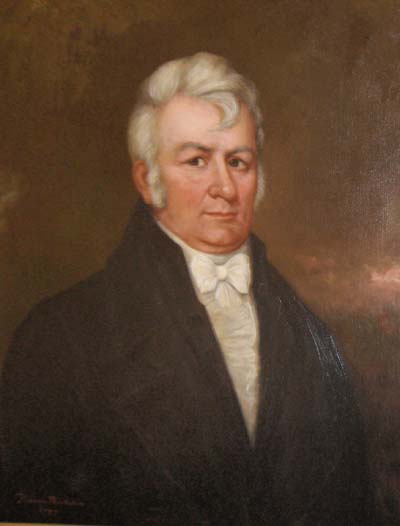
Levin Winder by Florence Mackubin

Levin Winder by Florence Mackubin. Maryland State Archives, MSA SC 1545-1043

Levin Winder was born in Somerset County on Maryland’s Eastern Shore along Monie Creek on September 4, 1757 to William and Esther (Gillis) Winder. He later served as captain in the 4th Maryland Regiment during the Revolution and rose in rank to lieutenant-colonel on June 3, 1781. After the war he returned to the eastern shore and resumed his occupation as a planter.

In 1806 he was elected as a federalist to the House of Delegates, serving three successive terms as an avid opponent of the national policies of the Republican Party and the war declaration. In June 1812, as a result of the Baltimore riots, the General Assembly elected Winder, defeating Governor Robert Bowie (1750-1818) by a vote of 52-29. Taking office that November Winder became the wartime executive and brigadier general of the 2nd Division, Eastern Shore, Maryland Militia. With the federalist continuing their opposition to the war the political affairs led to standstill between Maryland and the federal government. The bay depredations of the British navy the following spring, as well as threatening Annapolis, enabled Winder to call a special session of the Maryland Legislature on May 13, 1813 reporting “…that considerable alarms have permiated the state, in consequence of the appearance of a large naval force within the waters of the Chesapeake.”

With the advice of his Executive Council who assisted in coordinating the states’ war efforts, they continued issuing officer’s commissions, war supplies, and protection of the Chesapeake tidewater – with little financial or military assistance from the federal government.

Winder became soon aware of the Madison administration and that of the Secretary of War John Armstrong of ignoring the defense of Maryland. Although an anti-war governor, Winder had to contend with protecting the Maryland tidewater region from the increasing British attacks. Upon learning the federal government had supported Virginia in her defense, Winder remarked, “Virginia has but to ask and she received; but Maryland, for her political disobedience is denied.”

Despite the political troubles with the federal government, Winder galvanized the Maryland militia with supplies and several militia acts to protect the state from British incursions and attack serving as governor from 1812-1816. He died on July 1, 1819 and was buried on his estate on Monie Creek near Princess Anne, Somerset County, though the site of his grave has yet to be discovered.

Sources: Gerson G. Eisenberg, Marylanders Who Served the Nation:  A Biographical Dictionary of Federal Officials from Maryland (Annapolis:  Maryland State Archives, 1992), 233; Frank F. White, Jr.  The Governors of Maryland 1770-1970.  (Annapolis:  The Hall of Records Commission, 1965).


Published in: on April 10, 2011 at 7:33 pm  Comments Off on Levin Winder (1757-1819): Governor of Maryland  

British Spies enter Annapolis, August 1814

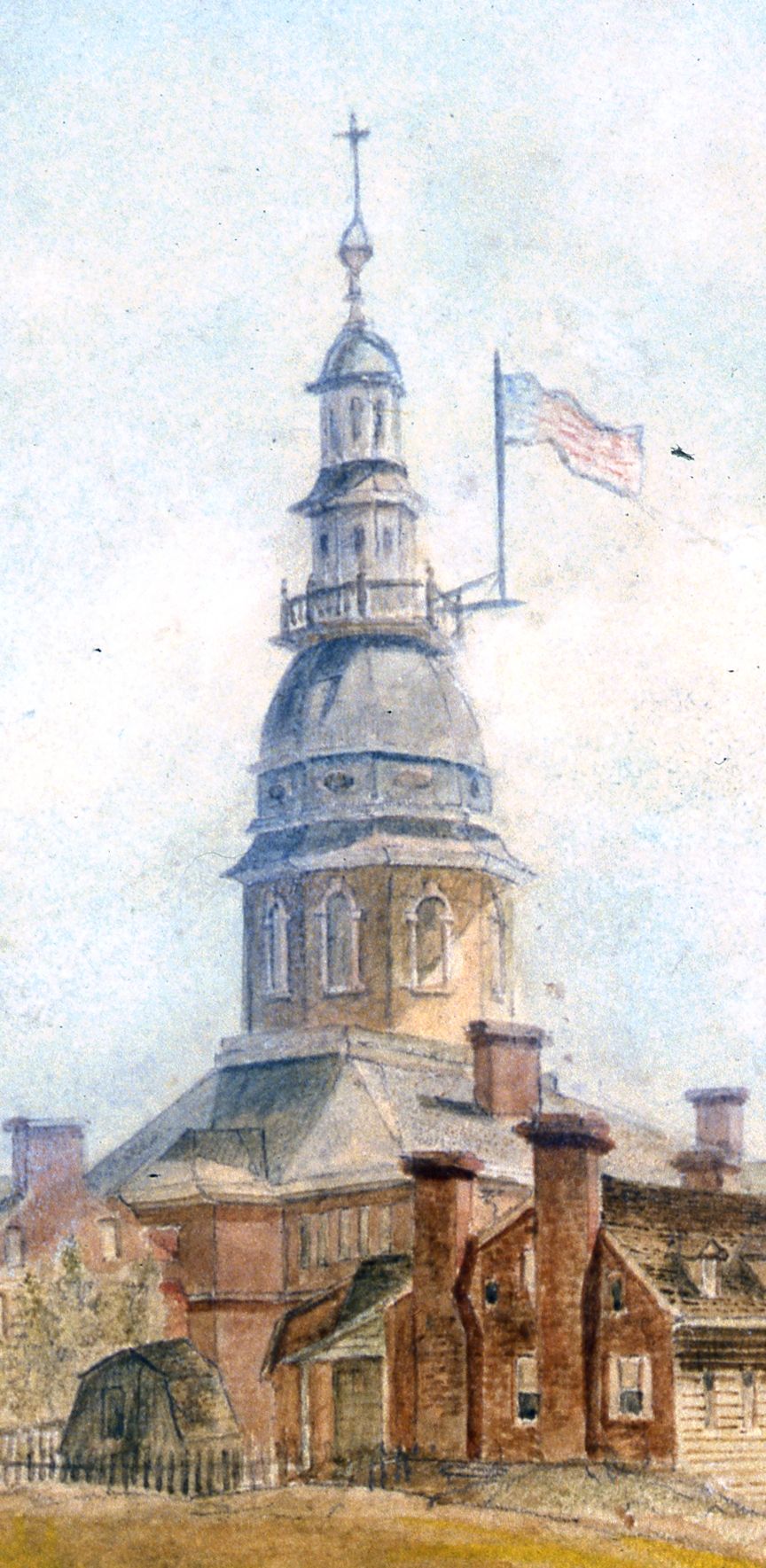
On August 14, 1814, onboard HM frigate Menalaus, Captain Sir Peter Parker reported he had anchored his ship off Maryland’s Eastern Shore opposite Annapolis unnoticed, while two of his officers rowed in a ships boat six miles across the bay and went ashore to reconnoiter the town. One of the officers, Lt. Benjamin Benyon, a Royal Marine commented that “… the Town is very pretty, the finest building is the State House which is in the centre of the Town, its built of brick, on the top of it is a large dome, this erected by the great Washington. This Town is well fortified, there are three thousand troops in it…”

Captain Parker informed the admiral that “…I may with safety give it as my opinion that Annapolis would face a very easy conquest (Two of my Officers walked round Fort Madison in the Night without being discovered.)…” That the officers and seamen had crossed the bay, approached Fort Madison, landed and walked freely unnoticed, suggest that the harbor defenses were not properly being guarded. Certainly a stronger presence should have been posted when a large British expeditionary forces had just entered the Patuxent River and eventually marched towards the U.S. Capitol.

Sources: Captain Peter Parker, RN, to Vice-Admiral Alexander Cochrane, August 30, 1814; Journal Kept during the Years 1813-1814 aboard HMS Menelaus, By Lieutenant Benjamin G. Benyon, RM;. (Western Reserve Historical Society, Cleveland, Ohio).

Published in: on April 10, 2011 at 6:36 pm  Comments Off on British Spies enter Annapolis, August 1814  

Annapolis: Diplomatic Port of Entry & Colonel John Stuart Skinner

On the evening of March 12, 1813, a British courier, Mr. Moore arrived in Annapolis on board the British packet Francis Feeling, Capt. Anthony Bell. Mr. Moore, that evening dined with Charles Carroll of Carrollton (1737-1832) at his town house. It was during this meeting that Carroll learned and thus informed his son that “the significancy of the place [Annapolis], and its being the station for flags of truce, will except it from that calamity [of war].” Thus Annapolis was designated an official port of entry, securing the state capitol from any acts of aggression.

In 1807 John Steuart Skinner (1788-1851) an Annapolis planter and lawyer was appointed notary public representing Maryland, who served as secretary for a republican meeting held at the State House on May 30, 1812. Their resolution was to “express in a public manner their sentiments on the present posture of affairs with Great Britain,” and to draft resolutions representing the City of Annapolis and Anne Arundel County.

On July 6, 1812, Congress approved “An Act for the Safe Keeping and Accommodation of Prisoners of War” that was followed by a “Provisional Agreement, for the Exchange of Naval Prisoners of War” on November 28 with the British government. In March 1813 Skinner was appointed colonel as agent for the U.S. State Department and for U.S. flags-of-truce for dispatches and prisoner exchange. His first mission came on February 27 when the British Packet, Francis Feeling entered Annapolis harbor under the guns of Fort Madison for dispatches to be received or sent between the U.S.Government and the British naval forces. It would be one of many such missions carried out by Skinner during the war that would enable him to acquire a diplomatic friendship with Rear-Admiral George Cockburn.

That fall Colonel Skinner was ordered to Baltimore with a U.S. Navy purser’s commission for those U.S. vessels being built in Baltimore and for the U.S. Chesapeake Flotilla. In September 1814 he would accompany lawyer Francis Scott Key on a diplomatic mission to the British fleet to secure the release of a Dr. William Beanes held on board HMS Tonnant. On Sept. 8 he and Skinner were transfered to an American flag-of-truce vessel, the President and together witnessed the bombardment of Fort McHenry (Sept. 13-14) that became the inspiration for a new national song, “The Star-Spangled Banner.”

In the years following, Skinner became the most influential editor in America for several agricultural journals he founded among of which was The Plough, the Loom, and the Anvil. He became the president of the Maryland Jockey Club and postmaster for Baltimore (1816-1849). He died on March 21, 1851 and is buried in Westminster Church burying ground in Baltimore. 

Sources: Charles Carroll of Carrollton to his son, March 12, 1813. Unpublished Letters of Charles Carroll of Carrollton…Ed. Thomas M. Field (New York: U.S. Catholic Historical Society, 1902); “Biographical Notice of John S. Skinner,” by Benjamin P. Poore The Plough, the Loom, and the Anvil, (New York, 1855).

Published in: on April 10, 2011 at 6:19 pm  Comments Off on Annapolis: Diplomatic Port of Entry & Colonel John Stuart Skinner